
Hugo came to me later, long after Emmy did. His philosophical musings and internal contradictions were much more complex to grasp than Emmy’s floaty and flirtatious spirit. In the end though, his voice became one of the most powerful in “What was Beautiful and Good,” my novel that follows the story of Emmy Hennings and Hugo Ball as they embark on their journey that leads them to open the Cabaret Voltaire.
Hugo Ball, the anti-Dada(ist)
If you know anything about Hugo Ball it’s probably that he was one of the founders of the Dada art movement. This, though, is technically not correct. In fact, he was against the whole DADA movement as an “ism.” He didn’t believe that an organised movement could make any social change.
At the time, in 1916 Europe in the middle of a Great War, he believed that society was too far removed from reality that anything tangible or expected would fall short of what was needed: an awakening. While it is fact that Hugo Ball (born Feb. 22, 1916 in Pirmasens, Germany) did spark the DADA art movement with the opening of the Cabaret Voltaire, it was his enthusiastic participants who took the movement across Europe and around the world.
A social and artistic revolution
Why, then, do we recognise Hugo Ball as the founder of the Dada art movement? And how did his work go on to inspire generations of artists when he worked so hard to make his work “meaningless?”
One of Hugo’s most famous works is a sound-poem, “Karawane,” in which is comprised of nonsensical words and syllables spoken in varied tone and rhythm. He preformed this work at the Cabaret Voltaire in Zurich, Switzerland in the spring of 1916, he was dressed in a cardboard suit like a “magical bishop.”
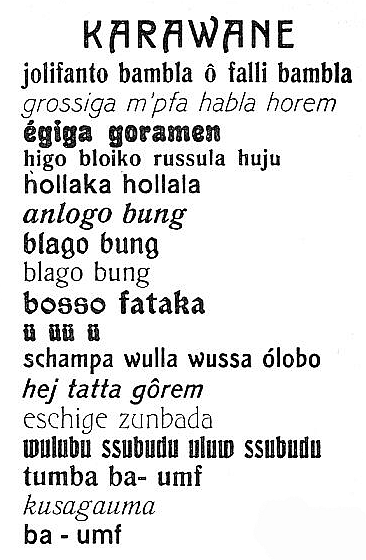
Along with his direction and innovative performances, Hugo’s ability to capture an audience’s attention in a time when entertainment was much-needed. His revolutionary spirit challenged the status quo, questioned the very essence of art, and inspired countless artists to embrace absurdity and dismantle norms. His radical ideas and unwavering belief in the power of artistic expression resonated far beyond the Dada movement, leaving an indelible mark on the world of art and literature.
A celebration and search for Hugo Ball’s true essence in “What was Beautiful and Good”
As we celebrate the 138th birthday of Hugo Ball, we celebrate the life and legacy of a man who defied convention and ignited a creative firestorm: the anti-dadaist, empath, intellect and revolutionary.
It’s this very essence of Hugo Ball that resonates within the pages of my novel, “What Was Beautiful and Good.” This literary, historical fiction tells the story of Hugo’s partner, Emmy Hennings, a free-spirited singer whose life becomes inextricably linked to Hugo’s during the tumultuous years of World War I.
In “What Was Beautiful and Good,” you’ll:
- Witness Emmy’s transformation: From aspiring singer to muse and collaborator, witness how Emmy embodies the spirit of Dada, embracing its rebellious spirit and defying societal expectations.
- Experience the birth of Dada: Immerse yourself in the electrifying atmosphere of the Cabaret Voltaire, the birthplace of this revolutionary movement, and witness the ideas and ideals that shaped its core.
- Explore the depths of artistic expression: Travel alongside Emmy and Ball as they challenge the very definition of art, pushing boundaries and exploring new forms of expression in the face of war and societal turmoil.
- Discover the enduring power of resilience: Despite the darkness that surrounds them, Emmy and Ball find solace and strength in their shared passion for art, reminding us of the transformative power of creativity even in the face of adversity.

“What Was Beautiful and Good” is a testament to the enduring legacy of Hugo Ball and the spirit he ignited. It’s a reminder that art can be a powerful tool for challenging the status quo, questioning norms, and finding beauty in unexpected places.
I invite you to celebrate Hugo Ball’s revolutionary spirit by exploring the world of “What Was Beautiful and Good.” Let Hugo and Emmy’s journey inspire you to embrace your own artistic voice, challenge conventions, and find beauty in the unexpected.
Happy birthday, Hugo Ball! Your legacy continues to inspire.
Want to learn more about Dadaism, Hugo Ball and Emmy Hennings in the novel “What Was Beautiful and Good”? Please consider purchasing from your local bookstore before ordering here.

 Jill Blocker
Leave a comment